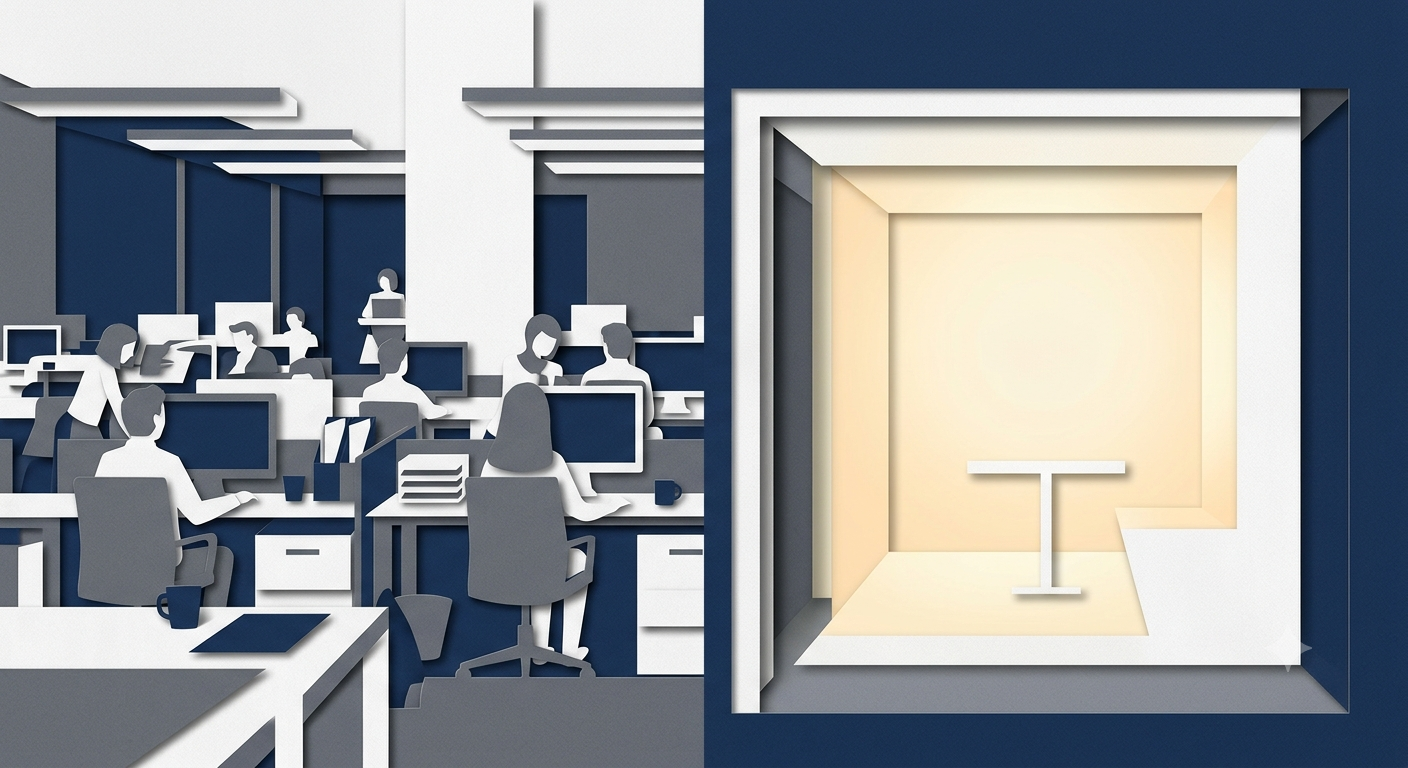
For the past few years, the corporate real estate playbook in Central and East Kowloon has focused on a singular aesthetic: open-plan layouts, collaborative high-top desks, and neon-lit breakout zones designed to mimic Silicon Valley. Human resources and real estate executives poured millions into dismantling physical walls to foster "spontaneous collaboration" and organic synergy. But as Hong Kong’s high-pressure market demands hyper-focus, these open environments have backfired spectacularly. The polarizing reality is that your expensive open-plan office is not a collaboration hub—it is a cognitive distraction zone that is actively driving your top-performing, deep-thinking talent out the door.
For creative professionals, developers, and strategic thinkers, the modern open office is an endurance test. The constant ambient noise, visual distractions of foot traffic, and the performative pressure of being visible to everyone at all times trigger chronic sensory overload. When employees spend more mental energy trying to block out their surroundings than executing high-value tasks, productivity collapses and talent begins looking for employers who offer physical boundaries.
The Open-Plan Trap: High Noise, Low Cognitive Yield
The theory behind open layouts was simple: remove physical barriers to increase face-to-face communication. However, workplace psychology reveals a different outcome. When physical privacy is entirely removed, human behavior shifts toward defensive isolation.
This architectural misalignment creates severe operational friction points:
- The Headphone Shield: To survive the noise of open spaces, employees wear noise-canceling headphones all day. This creates a psychological barrier that actually reduces organic communication compared to traditional layouts.
- The Loss of Deep Work: High-value cognitive tasks require undisturbed blocks of deep focus. In an open-plan layout, an employee is interrupted or distracted every few minutes, making sustained strategic thought nearly impossible.
- Increased Presenteeism: Employees feel constantly watched, which leads them to prioritize looking busy over actually being productive. This performative stress significantly accelerates burnout.
Reimagining Workspace Design for Deep Focus and Retaining Elite Talent
To retain premium candidates in a highly competitive market, Hong Kong employers must transition away from purely collaborative layouts. The office of the future must balance social zones with dedicated spaces that respect individual cognitive needs.
- Enforce Quiet Zones and Focus Sanctuaries: Treat office acoustics as a critical productivity metric. Designate physical zones where conversations, phone calls, and sudden interruptions are strictly prohibited, allowing employees to enter deep-focus states.
- Deploy Modular Quiet Pods: Rather than completely rebuilding the office, integrate high-quality, acoustic phone booths and individual workspaces. This gives employees the autonomy to choose their environment based on their current task.
- Implement Hybrid Office Etiquette: Designate specific days or hours of the week for collaborative team syncs, leaving the remaining days quiet and dedicated to individual execution.
True workplace innovation is not about aesthetics or trendy office perks; it is about creating an environment that respects human cognitive limits. Modern professionals want to work where they can perform at their highest level without unnecessary sensory exhaustion. At Me2Works, we observe this shift continuously: high-caliber talent actively evaluates an organization’s daily work environment and desk policies before accepting an offer. By shifting your real estate strategy from performative open-plan layouts to quiet, focus-driven workspaces, your organization can build a sustainable culture that attracts and retains elite talent.
References
- Hong Kong Institute of Human Resource Management (HKIHRM) Workspace Environment and Employee Productivity Study
- Labour Department Guidelines on Occupational Health and Mental Well-being in Modern Offices
- Me2Works Workplace Insights: Workspace Design Preferences Among Senior Professionals