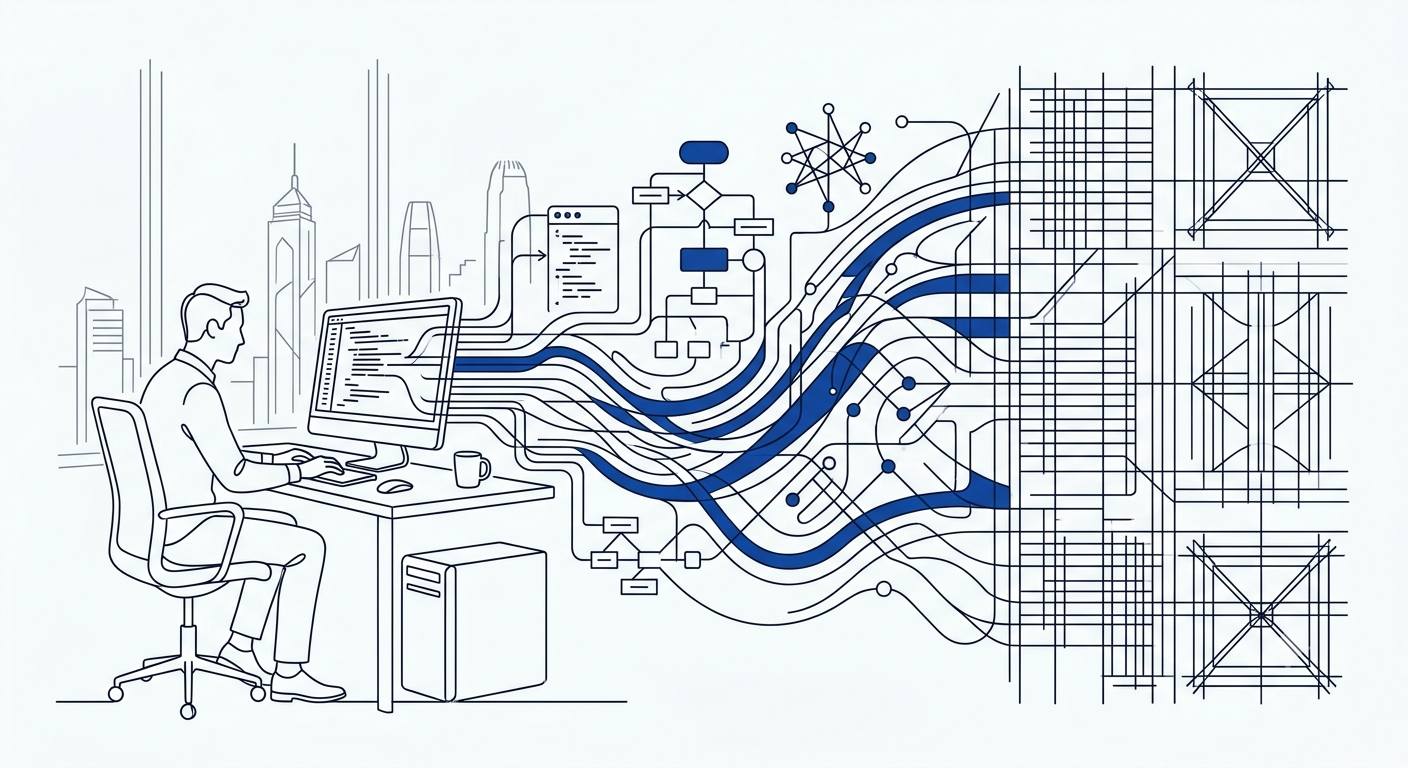
Your lead developer just built a fully functional customer portal in four hours using autonomous coding agents and prompt-based logic generation—a project that was budgeted for six weeks. Executive management is celebrating the massive bump in engineering velocity, but behind the sleek user interface lies an architectural nightmare: thousands of lines of unverified, non-deterministic boilerplate code that no single human on your team truly understands. Welcome to the era of "vibe coding," where non-technical founders and hasty product leads ship software based on raw intuition and AI outputs rather than rigorous software engineering principles. While the immediate productivity high is undeniable, Hong Kong enterprise tech stacks are quietly accumulating catastrophic long-term technical and security debt that will cost millions to rectify.
In the hyper-competitive tech ecosystems of Science Park and Cyberport, speed to market is frequently prioritized over system durability. Generative AI tools have lowered the barrier to software creation, enabling teams to spin up applications at unprecedented speeds. However, when software development shifts from structural design to continuous prompt tweaks, fundamental engineering hygiene—like unit testing, memory optimization, and strict threat modeling—gets completely bypassed. The polarizing truth is that vibe coding doesn't eliminate engineering complexity; it merely defers it, transforming software architecture into a black box that fails under real-world commercial stress.
The Operational Trap: Velocity vs. Architectural Integrity
Relying on vibe-coded solutions without strict oversight introduces severe vulnerabilities into modern corporate operations:
- The Black Box Fragility: When AI-generated modules inevitably break or encounter edge cases during peak traffic, developers who relied on prompt generation rather than manual logic struggle to debug the core codebase, leading to prolonged system outages.
- Systemic Security Vulnerabilities: Generative models routinely pull logic patterns from public code repositories, often re-introducing obsolete packages, insecure dependencies, and unparsed input fields that expose enterprise databases to malicious exploits.
- The Maintainability Crisis: As software requirements evolve, refactoring a chaotic, AI-synthesized codebase becomes nearly impossible. What was created in hours often requires a complete, expensive ground-up rewrite by senior engineers within a year.
Structural Governance: Balancing AI Velocity with Human Oversight
To harness the incredible speed of automated coding tools without compromising organizational security, Hong Kong tech and HR leaders must establish rigorous engineering governance.
- Mandate Human-in-the-Loop Code Audits: Enforce a strict policy where no AI-generated code reaches production without peer review and sign-off by a senior systems architect. Treat AI outputs as junior-level drafts rather than final deliverables.
- Institute Automated Security Sandboxing: Implement mandatory static and dynamic security testing (SAST/DAST) within your continuous integration pipelines. Automatically flag and quarantine any AI-synthesized code containing outdated dependencies or non-standard logic structures.
- Redefine Developer Performance Metrics: Shift technical evaluations away from raw deployment volume or speed to commit. Reward engineering teams for code simplicity, test coverage, and long-term system stability.
High-performing organizations treat AI tools as amplifiers for technical talent, not substitutes for foundational computer science. At Me2Works, we observe this dynamic constantly: the most resilient tech teams in the region are those that combine cutting-edge AI acceleration with uncompromising human engineering standards, ensuring short-term speed never compromises long-term enterprise viability.
References
- Gartner Research: Managing the Risks and Architectural Debt of Generative AI Code Generation
- HKUST Business School & Department of Computer Science: AI Adoption and Code Security Benchmarks in HK Enterprises
- The Hong Kong Computer Society (HKCS): Software Quality Assurance and Governance Guidelines in the AI Era
- Korn Ferry Tech Leadership Report: Evolving Competencies for Chief Technology Officers in Asia-Pacific