The Strategic Shift in Hong Kong Sourcing
The recruitment landscape in Hong Kong is undergoing a profound evolution. Faced with rapid technological integration, localized business transformations, and a conservative economic backdrop, corporate human resources teams are moving away from linear hiring patterns. Historically, vacancies within digital-first organizations, technology ecosystems, and modern management teams were reserved strictly for candidates possessing vertical, sector-specific tenures. Today, a clear shift toward skills-based hiring has created unprecedented opportunities for mid-career professionals navigating non-traditional industry pivots.
For the contemporary human resources leader, a non-traditional profile is no longer viewed as a risky gamble. Instead, it represents a strategic opportunity to inject mature organizational capabilities into fast-moving environments. When vetting candidates looking to transition out of legacy frameworks, talent acquisition teams are trained to ignore corporate labels and evaluate the core durability of a candidate’s underlying competencies. Professionals who can successfully audit their careers and translate their operational experience into modern corporate metrics are positioning themselves as highly competitive assets.
The Value Matrix: Translating Legacy Skills to Digital Roles
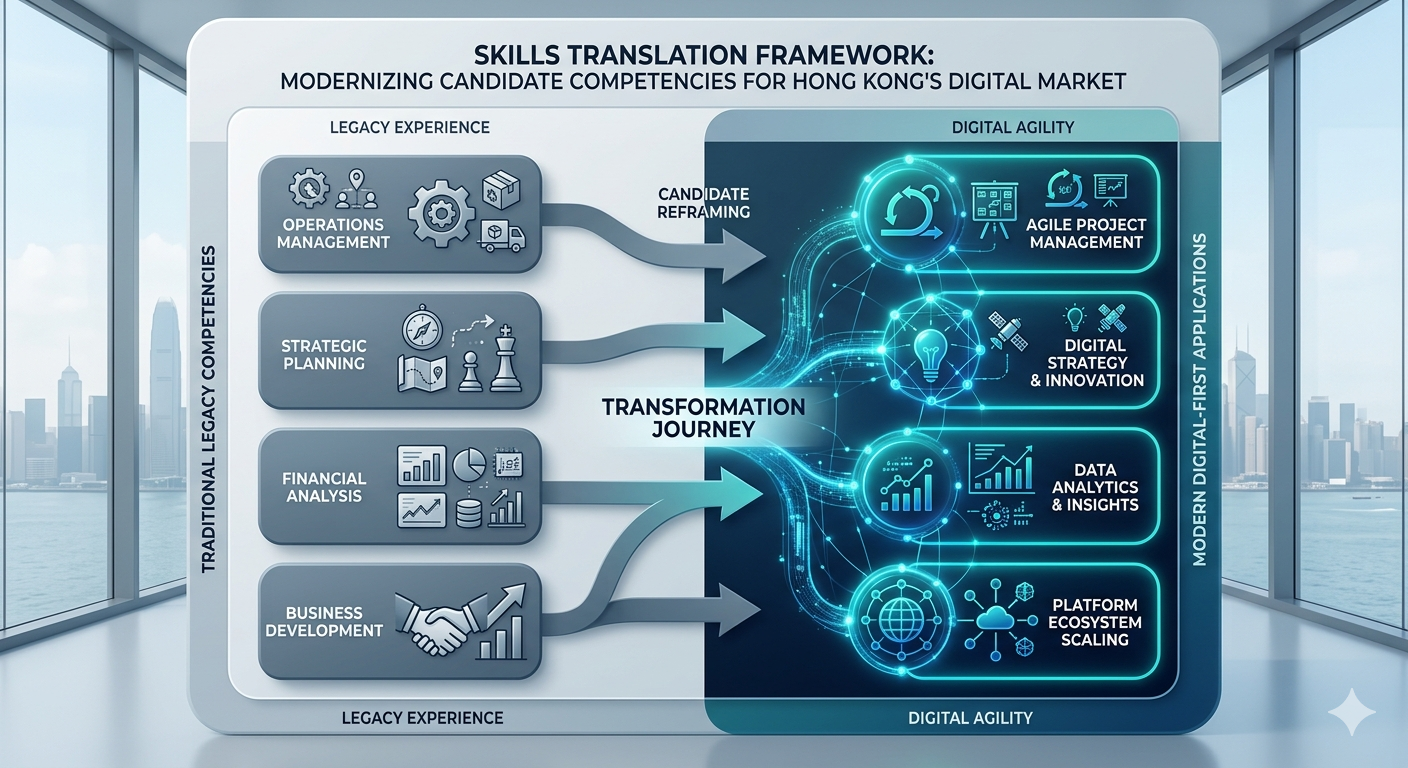
The primary challenge of a mid-career pivot lies in communication rather than capability. Mid-career candidates frequently possess elite operational strengths but struggle to position them in a language that resonates with digital-first businesses. To bridge this communication gap, professionals must systematically reframe their functional capabilities into high-demand, modern competencies:
- Strategic Planning as Scalable Architecture: In tech-forward and agile environments, strategic planning is rarely about static five-year horizons. HR teams look for candidates who can reframe corporate planning as the capacity to build scalable frameworks, optimize resource allocation, and map complex business architecture during periods of ambiguity.
- Operations Management as Process Optimization: Managing a physical factory floor, a logistics hub, or a corporate hospitality department relies on identical foundational mechanics to engineering software delivery pipelines. Mid-career professionals must translate operational oversight into the language of workflow design, automation mapping, and system integration.
- Channel Development as Ecosystem Scaling: Traditional business development and sales channel management directly mirror modern partnership strategy and platform ecosystem scaling. Professionals need to emphasize their capability to manage cross-functional stakeholder alignments, negotiate complex commercial agreements, and sustain strategic business alliances.
- Risk Management as Corporate Governance Awareness: Experience in traditional regulatory navigation, operational auditing, or compliance is incredibly attractive to modern digital asset and platform firms. Presenting risk management as a proactive framework for governance and long-term asset protection immediately builds credibility with C-suite decision-makers.
De-risking the Non-Traditional Candidate
When a human resources business partner evaluates a candidate with a non-traditional background, their primary objective is risk mitigation. The most common concerns surrounding mid-career pivots are cultural adaptability, technical flexibility, and the willingness to operate within non-linear corporate hierarchies. Non-traditional candidates can proactively manage and defuse these internal assumptions by intentionally demonstrating continuous professional upskilling.
Actively engaging with local upskilling frameworks, continuous education micro-credentials, and professional development programs signals a strong capacity for rapid knowledge acquisition. Demonstrating an active commitment to mastering emerging technologies, data frameworks, or digital project delivery practices completely reframes the career narrative. The focus shifts from what the candidate lacks in specific industry tenure to the immense value of their deep management experience and mature commercial judgment.
Ultimately, navigating a mid-career pivot in Hong Kong requires an intentional shift from technical execution to strategic alignment. By focusing on career durability, demonstrating comfort with operational ambiguity, and framing legacy achievements around long-term business value, non-traditional candidates can transform their unique backgrounds into a premium corporate advantage.
References:
- Gemini Personnel: Building Career Longevity in a Market That Moves Fast
- TG Hong Kong: 2026 Talent Trends and Skills-Based Hiring
- Human Resources Online: Transform Talent Hong Kong Ecosystems