The hidden cost of the modern workplace is the cognitive depletion of the teams designed to support it. Across the corporate landscape, enterprise employee relations (ER) teams are facing a significant increase in both the volume and complexity of workplace cases. The ongoing transformation of the regional workforce—characterized by complex multigenerational demands, rapid digital shifts, and strict regulatory overhauls—means that a single case no longer fits a predictable template. An HR professional might begin their morning managing an intricate cross-border payroll compliance issue, move to mediating a delicate workplace harassment grievance, and conclude the day tracking complex continuous contract calculations under the newly active 468 rule.
When human resource professionals are buried under this level of administrative overhead, a systemic breakdown occurs. The critical time required to read long intake forms, log communications, organize evidence, and manually check compliance against the Employment Ordinance leaves almost no room for meaningful human connection. When an employee comes forward with a highly sensitive mental health concern or a complex workplace conflict, they are often met with a team that is structurally exhausted. This dynamic turns human resource departments into rigid, reactive centers focused entirely on closing tickets rather than resolving human issues.
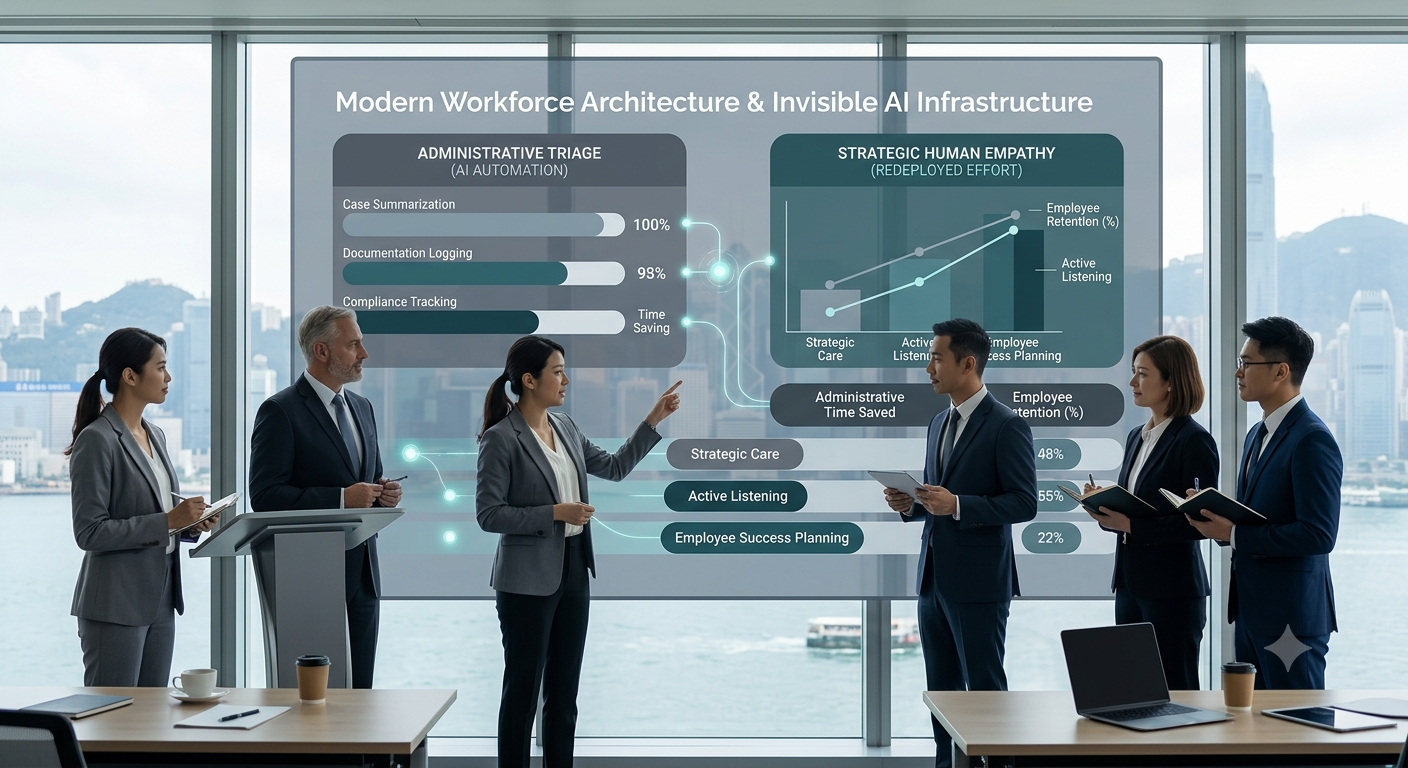
To break this pattern, progressive enterprise leaders are introducing invisible AI infrastructure into their core corporate architecture. This operational model uses artificial intelligence not as a public-facing chatbot or an automated decision-maker, but as a silent, back-end digital assistant dedicated to optimizing internal workflows. This technical approach directly addresses the core thesis established by industry leaders like HR Acuity: true operational resilience is achieved when technology handles administrative workflows, allowing human capital to focus entirely on high-empathy execution.
The Mechanics of Invisible Infrastructure: Automated Administrative Triage
Implementing an invisible AI infrastructure changes the entire workflow of an employee relations case from the moment an intake is filed. Instead of forcing a human manager to spend valuable hours reviewing messy text, the back-end AI instantly processes the input to extract key data points, identify potential regulatory risks, and generate clean, objective event summaries. This triage phase occurs entirely behind the scenes, ensuring that by the time an HR business partner opens the case, the administrative foundation is already established.
Through deep integration with advanced case management platforms, this backend automation modernizes multiple operational layers:
- Standardized Workflow Generation: The AI identifies the core legal categories within an intake and immediately populates a customized operational roadmap, ensuring compliance with local statutory rules while standardizing documentation across business units.
- Intelligent Historical Case Matching: By securely scanning anonymized internal archives, the infrastructure highlights relevant historical precedents, enabling teams to maintain consistent disciplinary actions and fair wage claim handling across the enterprise.
- Automated Regulatory Alignment: As statutory thresholds change—such as expansions to paid leaves or shifts in the minimum wage floor—the back-end assistant updates documentation templates in real time, preventing compliance failures before files are processed.
Maximizing Employee Lifetime Value through High-Empathy Intervention
From a strict corporate governance perspective, shifting administrative noise to an automated backend solves a major budget optimization puzzle for executive boards. When artificial intelligence takes over documentation management, the time required to resolve a standard employee relations case drops significantly. This operational efficiency directly lowers overhead, prevents costly legal escalations, and ensures consistent compliance across the enterprise.
However, the most profound return on investment is measured in employee lifetime value and long-term career durability. When an employee relations specialist is freed from repetitive data entry, they can step away from their screen and step into their true role: acting as a highly compassionate lifestyle and career enablement partner. They gain the mental clarity and available hours required to conduct unhurried, empathetic consultations, design highly personalized retention frameworks, and build a culture of true psychological safety.
In a competitive market like Hong Kong, where professional development, workplace flexibility, and robust care are increasingly valued over raw base salary, an employer's internal support infrastructure serves as a major corporate differentiator. When an organization builds an operational model that uses advanced technology to protect and elevate human care, it drives long-term workforce engagement, fosters deep organizational loyalty, and secures its most valuable human capital assets against external market volatility.
References
- HR Acuity Annual Workplace Intelligence and Employee Relations Benchmark Survey
- Hong Kong Labour Department Statutory Employment Ordinance Legal Revisions