The Hidden Financial Drain of Disengagement
Every morning across corporate centers from Central to Kwun Tong, a silent operational drain takes place. Gallup’s latest global workplace data highlights a stark reality for executive leadership: employee engagement has stalled at a critical low point, creating a massive multi-trillion dollar drag on global productivity. In a fast-moving, high-cost market like Hong Kong, this phenomenon is felt acutely as quiet quitting. This is the process where a professional, feeling structurally boxed in or unseen, completely detaches psychologically from their organization. They continue to report for duty and fulfill the bare minimum requirements of their employment contracts, but their discretionary effort, innovation, and passion evaporate entirely.
For chief human resources officers and C-suite executives, the traditional solution to a disengaged workforce has been defensive compensation adjustments or a reliance on external recruitment to replace stagnant talent. However, in the current economic landscape, where organizations face intense cost pressures and headcount expansions are strictly scrutinized, this reactive approach is unsustainable. The financial cost of quiet quitting is incredibly high, encompassing lost operational momentum, degraded client service quality, and eventual recruitment expenses when the individual finally exits the firm. To solve this, forward-thinking enterprises are shifting their focus away from the exit door and toward a much more powerful talent strategy: internal mobility, or the concept of the quiet flit.
Deconstructing the Quiet Flit
The core concept of the quiet flit is simple yet transformative. Instead of forcing a high-performing but burned-out employee to look outside the company for a fresh challenge, human resources designs seamless, friction-free internal pathways that allow them to pivot into a new role, department, or function within the same corporate umbrella. This strategy changes the retention equation entirely. It acknowledges that an employee's desire to leave a specific role is rarely a sign of disloyalty to the brand itself; rather, it is usually a desperate search for professional growth, a healthier cultural dynamic, or relief from a mismatched workload.

When an enterprise masters internal mobility, it achieves a powerful competitive advantage. The organization retains invaluable institutional knowledge, protects its cultural continuity, and avoids the steep premium and onboarding friction associated with hiring external candidates. More importantly, it directly answers the top non-monetary priorities driving modern professionals: career progression, skill diversification, and long-term professional relevance.
Building the Architecture for Seamless Career Transitions
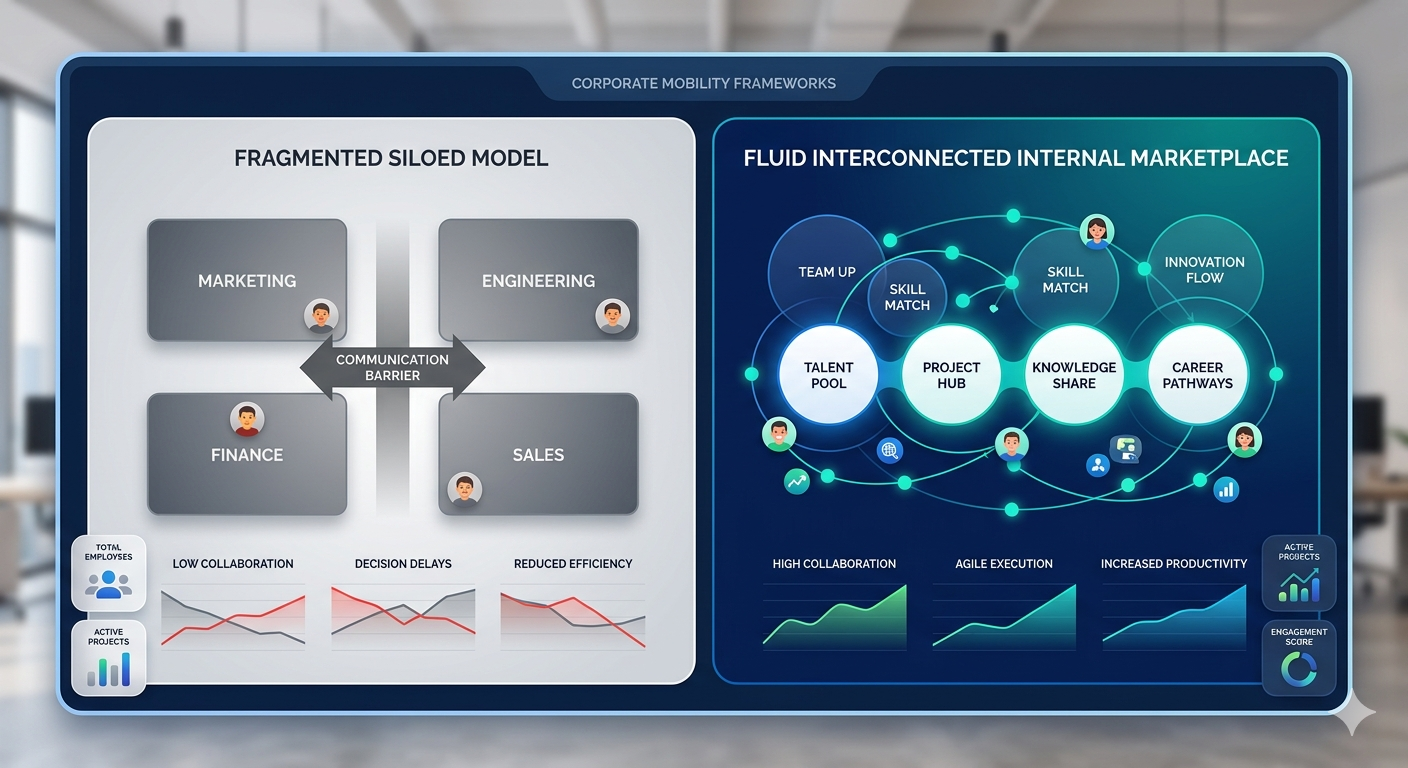
To successfully transition from a culture of quiet quitting to an ecosystem of fluid internal mobility, HR leaders must dismantle the structural silos that naturally develop within corporate environments. Me2Works recommends implementing three foundational pillars to build an effective internal career transition pathway:
1. Eradicate Managerial Hoarding
The single greatest barrier to internal talent mobility is the manager who hoards high performers. When a department head actively blocks an employee from exploring internal opportunities out of a fear of losing a top producer, they inadvertently guide that employee directly toward external competitors. Executive leadership must reshape performance incentives so that managers are actively recognized and rewarded for developing and exporting talent into other areas of the business. Internal mobility must be treated as a core organizational health metric, not an administrative inconvenience.
2. Establish Transparent Talent Marketplaces
Employees often look outside their organizations simply because external opportunities are more visible and clearly defined than internal options. HR departments must democratize access to career growth by creating transparent, centralized internal talent marketplaces. These platforms should leverage automated skill-mapping to proactively recommend open positions, cross-functional projects, or brief secondments to current employees whose competencies and performance profiles align with the roles.
3. Cultivate Psychological Safety for Career Exploration
An employee will never openly discuss their desire for a career pivot if they fear that expressing interest in another department will lead to professional retaliation or being labeled a flight risk by their current supervisor. Organizations must establish a high level of psychological safety around career growth. This means instituting regular, structured career development check-ins that are completely decoupled from annual performance reviews, giving employees a safe, formal space to map out their next internal moves.
By treating the workforce as a highly fluid pool of adaptable skills rather than a static collection of rigid job descriptions, Hong Kong’s leading corporations can successfully counter the quiet quitting epidemic. The choice facing today's executives is clear: allow top talent to quietly check out, or empower them to gracefully pivot into their next great professional chapter within your own walls.
References
- Gallup State of the Global Workplace Annual Report
- Hong Kong Institute of Human Resource Management Sector Briefings