"They are brilliant on paper, but I’m just not sure they’re a culture fit." This single sentence, quietly repeated across executive boardrooms in Central and Quarry Bay, is doing more to stunt organizational innovation than any macroeconomic headwind.
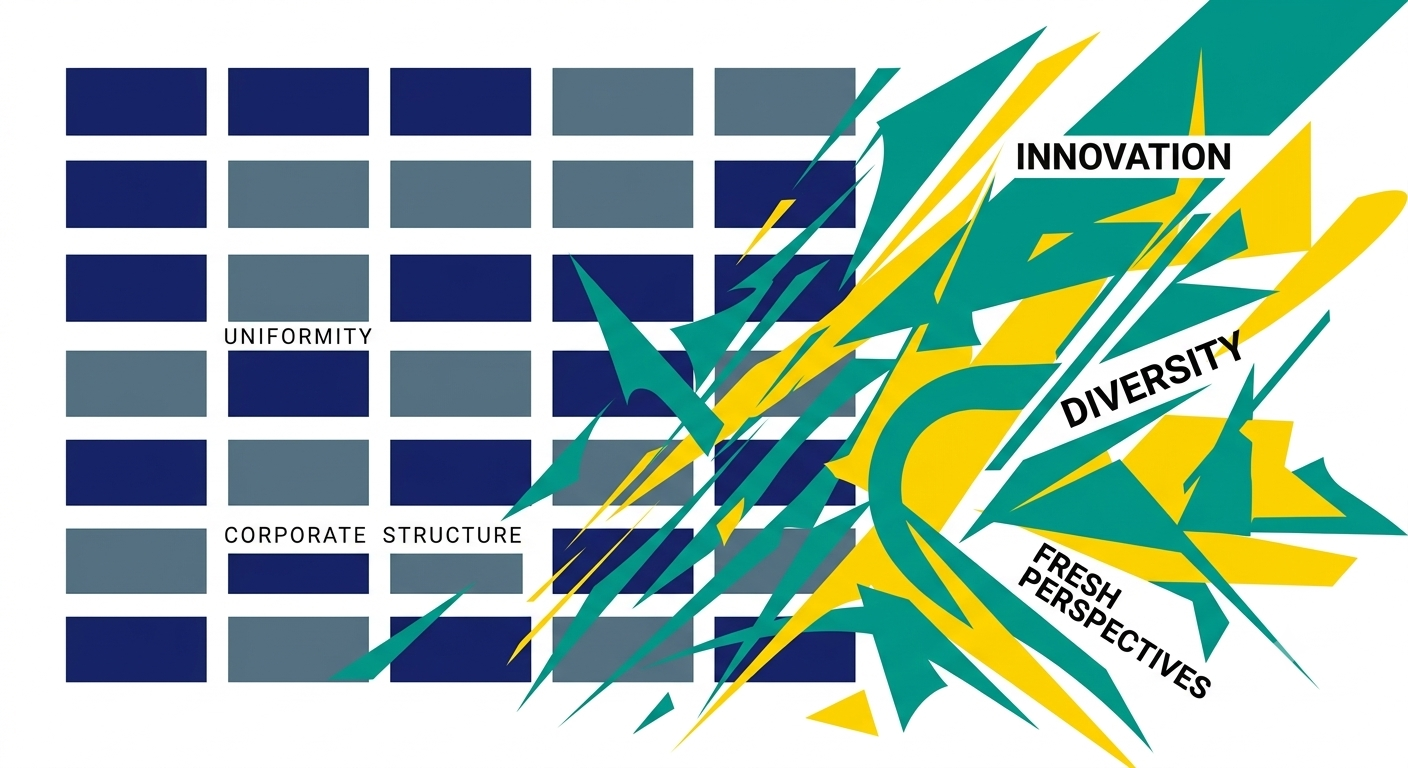
When leadership teams use "culture fit" as a primary evaluation matrix, they unconsciously corporate-engineer a dangerous byproduct: cultural homogeneity. In an accelerated digital business landscape, hiring people who think, speak, and solve problems exactly like your existing team doesn't safeguard your culture—it paralyzes your ability to adapt.
The Echo Chamber Trap
In many premium Hong Kong enterprises, corporate culture has historically been defined by structural alignment, shared social backgrounds, and institutional compliance. When a candidate breaks that mold—perhaps by challenging long-standing operational hierarchies or bringing an unfamiliar, highly disruptive approach to problem-solving—they are immediately flagged as "friction."
This defensive hiring posture creates a dangerous leadership echo chamber. When an entire management tier shares identical cognitive blind spots, the organization loses its corporate immune system. They fail to see shifting consumer behaviors, misread digital disruption patterns, and struggle to manage multi-generational talent. True operational resilience requires cognitive friction, not social comfort.
Moving from Culture Fit to Culture Add
To build a highly competitive workforce, forward-thinking HR leaders are abandoning traditional, vibe-based culture screening in favor of objective competency structures:
- The "Culture Add" Framework: Instead of asking how a candidate conforms to your current environment, ask: What perspective, skill, or background does this person possess that our leadership team currently lacks?
- Behavioral Evaluation Standardization: Replace unstructured, casual coffee interviews with clear, matrix-driven behavioral questions. Evaluate candidates on their demonstrated ability to navigate ambiguity and execute complex projects, rather than conversational chemistry.
- Friction-Tolerant Leadership Up-skilling: Train executive stakeholders to welcome constructive disagreement. If a team never argues about strategy, they aren't aligned—they are merely compliant.
By actively hiring for complementary cultural additions rather than identical fits, organizations open up massive creative avenues. Partnering with data-driven recruitment ecosystems like Me2Works enables enterprises to source highly objective talent pools, stripping hidden pedigree biases away from initial screening pipelines to ensure your next executive hire brings real evolutionary value.
References
- McKinsey & Company: Shifting the Paradigm—From Culture Fit to Cognitive Diversity in Executive Teams
- HKU Business School: Corporate Homogeneity and Strategic Stagnation in APAC Financial Hubs
- Chartered Institute of Personnel and Development (CIPD) Asia: Overhauling Interview Bias in Multi-Generational Work Environments