The metrics defining corporate peak performance are undergoing a major evolution. For years, organizations evaluated leadership capability through standard commercial outputs: project delivery timelines, quarterly budget management, and operational efficiency. However, as workplace anxiety and structural burnout rise globally, forward-thinking human resource leaders are recognizing a direct link between an organization's bottom line and its emotional environment. At the center of this dynamic is the line manager, an individual whose daily interactions shape employee performance and retention far more than any corporate wellness policy.
Data from workplace wellbeing organizations, including Mental Health First Aid England, reveals a striking reality: a direct supervisor has as much impact on an employee’s mental health as their spouse. Despite this profound influence, global and local indices indicate that fewer than half of all people managers receive formal training on how to handle sensitive mental health concerns or conduct compassionate career conversations. This gap in leadership capability represents a major vulnerability for organizations. When line managers default to rigid, purely transactional communications, early indicators of psychological distress go unnoticed, directly driving up turnover, presenteeism, and recruitment costs.
The Business Case for Empathetic Leadership
Investing in empathetic leadership training is not merely a soft corporate social responsibility initiative; it is a high-return financial strategy. When line managers are trained to spot the early warning signs of chronic stress—such as unexpected drops in focus, changes in communication patterns, or sudden withdrawal from collaborative projects—they can intervene long before an issue escalates into a operational crisis.
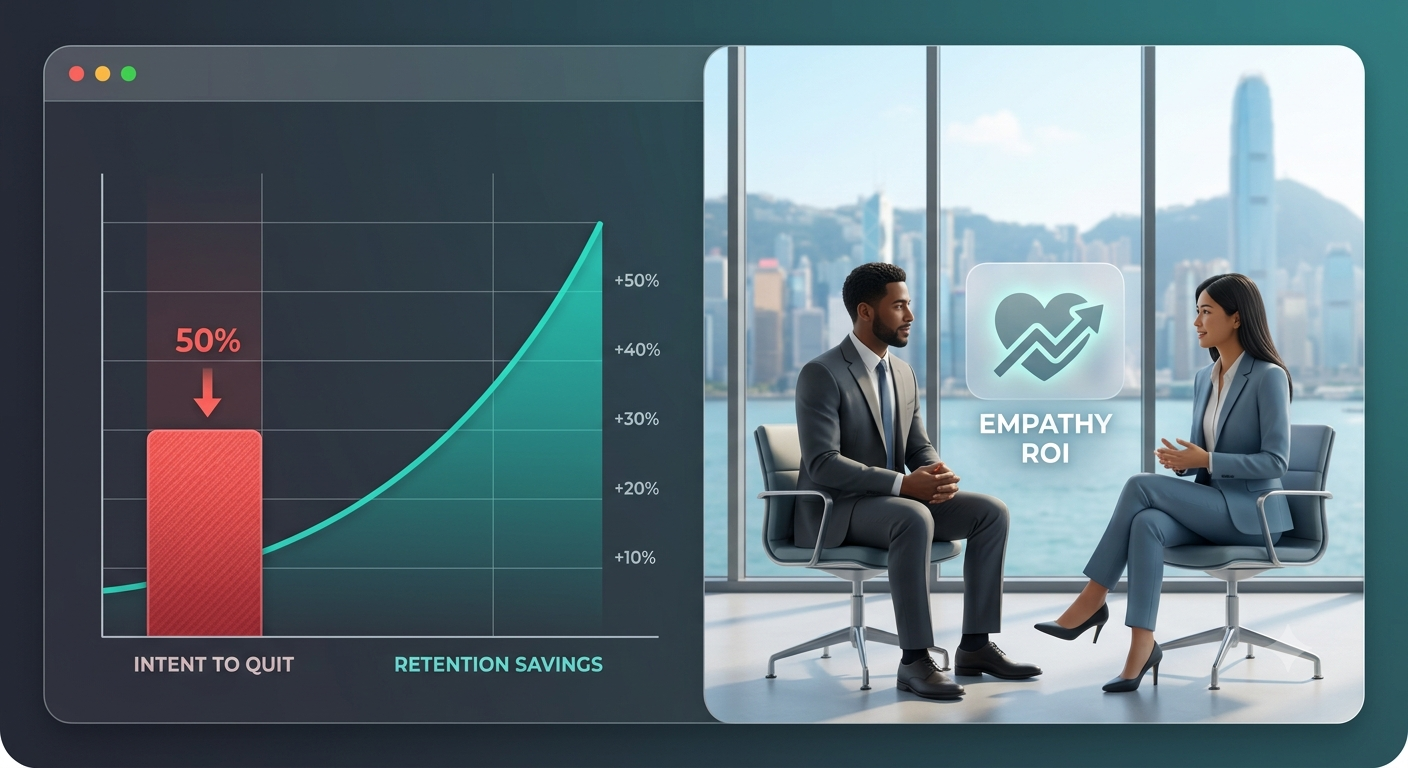
According to global workplace intelligence reports, equipping managers with the communication frameworks needed to hold supportive, non-judgmental mental health interventions can cut an employee’s intent to resign by half. In a highly competitive talent market like Hong Kong, where specialized replacement costs can equal up to double an employee's annual salary, reducing attrition through early empathetic support offers a clear, measurable return on investment. Furthermore, prioritizing psychological safety protects long-term employee lifetime value, turning a vulnerable workforce into an adaptable, highly innovative team.
Operationalizing Compassion: The Line Manager Framework
To turn empathy into a scalable corporate asset, chief human resource officers and business directors must move away from abstract cultural goals and build structured training programs. Managers require actionable, repeatable communication techniques that balance compassion with clear professional boundaries.
The strategic playbook for building an empathetic management layer includes:
- Normalizing Active, Non-Transactional Check-Ins: Shift one-on-one meetings away from purely checklist-driven task updates. Managers should structure regular, dedicated space to assess an individual’s current workload capacity, operational friction points, and overall wellbeing.
- Deploying the "Identify, Validate, Signpost" Framework: Train leaders to recognize behavioral changes without attempting to act as licensed therapists. Managers should learn to identify anomalies, validate the employee's experience with supportive language, and guide them to official corporate resources, such as Employee Assistance Programs or internal mental health advocates.
- Decoupling Vulnerability from Performance Evaluation: Ensure that when an employee steps forward to discuss burnout or mental health challenges, the conversation is handled confidentially and completely separated from performance ratings or promotion timelines, establishing true psychological safety.
By consciously embedding mental health literacy into the standard core competencies of all people leaders, Hong Kong enterprises can build highly resilient organizational cultures. Eliminating the stigma around vulnerability helps businesses unlock cross-functional innovation, lower voluntary turnover, and turn empathetic governance into a sustainable engine for long-term commercial execution.
References
- Mental Health First Aid (MHFA) England: Workplace Wellbeing and Line Manager Capability Insights
- Morgan McKinley: Workplace Trends Report on Anxiety, Retention, and Employee Experience
- Simmons & Simmons Practice Advisory: Navigating Mental Health under the Disability Discrimination Ordinance