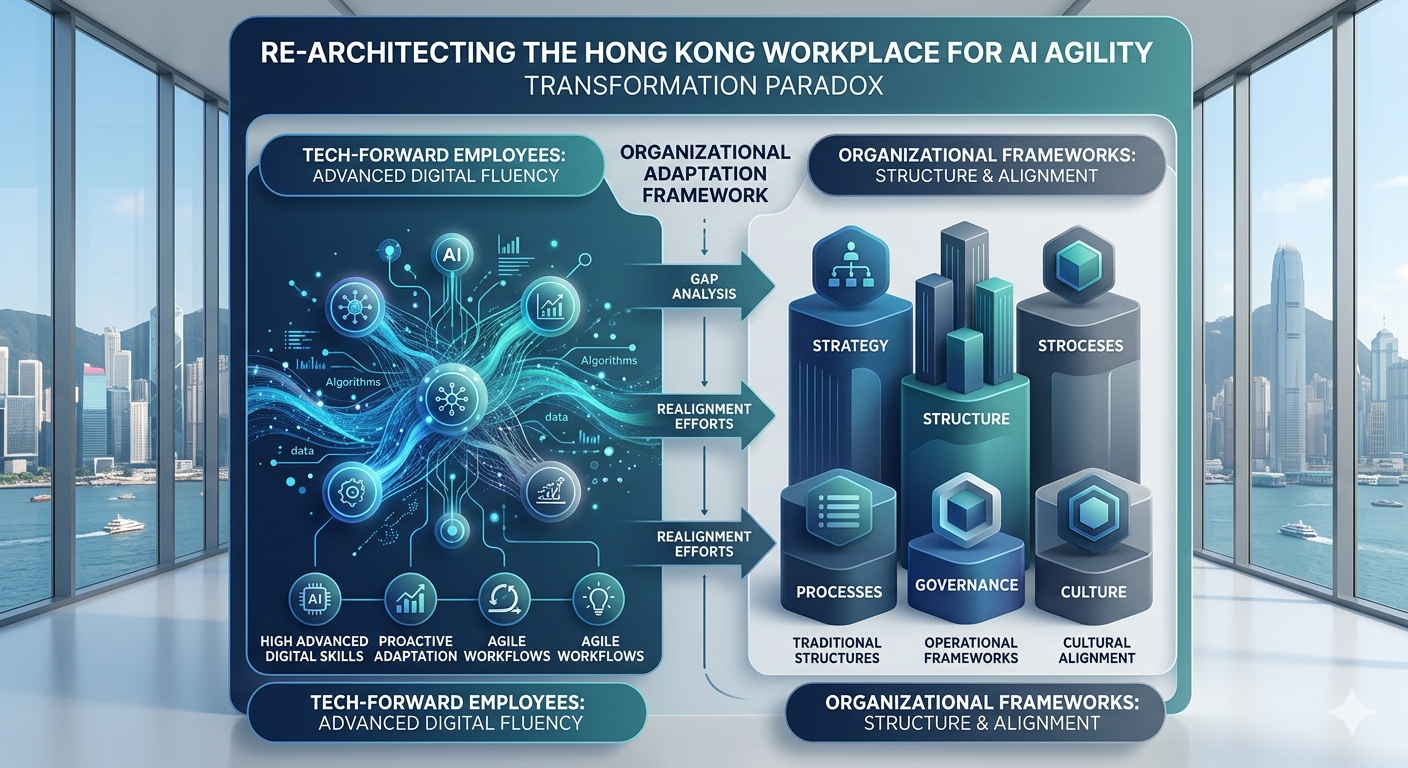
The latest insights from Microsoft’s Work Trend Index highlight a dramatic shift in how the Hong Kong workforce engages with technology. While 18% of local employees are operating as advanced "Frontier Professionals"—deploying intelligent agents and structuring complex multi-agent workflows—their corporate environments are falling behind. This growing misalignment, coined the Transformation Paradox, presents a unique challenge for human resources leaders. The friction is no longer a matter of workforce capability, but a structural roadblock where corporate architecture lacks the design to truly capitalize on this surge of individual digital efficiency.
According to research insights, only 19% of local AI users report that corporate leadership is clearly and consistently aligned on workplace technology deployment. Furthermore, a mere ten percent feel rewarded for workflow reinvention when operational results are not immediate. This disconnect means that while workers use cognitive tools to analyze information and streamline daily tasks, companies are still using legacy operating models. To bridge this gap, businesses must pivot from passive software adoption to deliberate organizational redesign, restructuring teams to leverage automated workflows rather than treating new tools as mere text-generation shortcuts.
Closing this organizational gap requires a shift in how roles are scoped and measured. Human resources professionals are tasked with rewriting performance frameworks to incentivize system-wide innovation rather than just tracking baseline output. Forward-thinking companies are already moving beyond basic upskilling programs to focus on change management and culture. By aligning executive strategy with the grassroots agility of their tech-forward staff, Hong Kong businesses can transform individual digital productivity into long-term corporate value.
References: