The traditional playbook for corporate advancement in Hong Kong was built on physical presence. For decades, arriving before the director, staying late at the office desk, and securing a seat at impromptu lunchtime discussions were the primary ways to build professional trust. However, the modern corporate ecosystem requires a different standard of professional proof.
With remote work policies and flexible hot-desking structures now anchoring major operations from Central to Kowloon, relying on passive physical observation is no longer an effective strategy. When leaders do not see your daily work directly, your professional contributions can easily fade from view. True career durability in a hybrid model demands an intentional strategy for "managing up"—the deliberate practice of advocating for your value, providing exceptional project clarity, and anchoring your career visibility in verifiable data.
The Proactive Communication Cadence
Managing up effectively does not mean cluttering your manager’s direct messages with minor daily updates or seeking constant validation. In fact, over-communicating administrative tasks can quickly be perceived as a lack of professional independence. Instead, successful remote professionals establish a predictable, high-value communication cadence.
To build trust across digital distances, consider restructuring your reporting approach into three distinct communication pillars:
- The Intentional Weekly Roadmap: Begin each work week by sending a concise, bulleted update highlighting your top three strategic priorities. Frame these items around business impact rather than simple tasks. This gives your supervisor immediate clarity on your weekly goals and allows them to course-correct your focus before time is spent on misaligned projects.
- The High-Value Progress Digest: Instead of presenting an unorganized list of completed duties at month-end, organize your achievements around core business goals. Focus on the specific problems you solved, the blockages you cleared, and the steps you took to keep projects moving forward on schedule.
- The Clear Risk Assessment: Never let your manager discover a project delay through a third party or a missed deadline. When a bottleneck arises, flag it early alongside two viable, researched solutions. This shifts the conversation from a problem report into a strategic problem-solving session.
Aligning with Leadership’s Preferred Channels
Every executive processes business data differently. A major mistake hybrid workers make is communicating via channels that match their own habits, rather than adjusting to the preferences of their department heads. Part of managing up effectively involves understanding how your leadership consumes information.
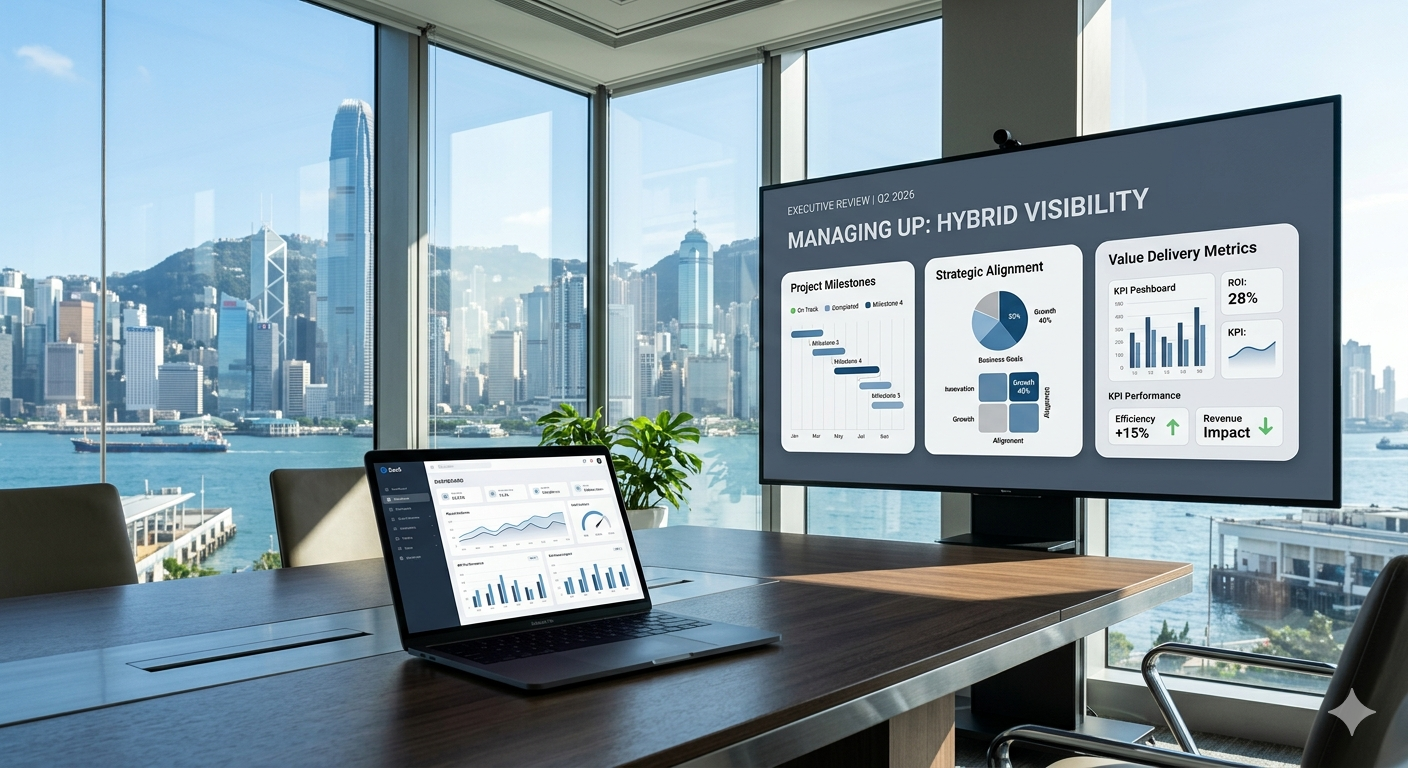
Take the time to evaluate your supervisor's engagement patterns. Do they prefer brief, structured summaries over messaging platforms, or do they respond better to data-driven bullet points sent via email? If your executive relies heavily on visual progress, transitioning your status updates into a clean shared dashboard can instantly improve collaboration. Matching their communication style reduces friction, ensures your updates are actually read, and establishes you as a reliable and highly organized team member.
Curating Micro-Moments of Engagement
Building a strong professional relationship requires more than just sharing project status metrics; it relies on consistent micro-interactions. In a hybrid office framework, you must intentionally design these connection points rather than waiting for them to happen by chance.
Maximize your visibility during video conferences by arriving early to participate in casual, pre-meeting conversations. Use these informal minutes to share quick industry insights or follow up on broader organizational goals. When you are working on-site, align your calendar with key decision-makers to secure brief face-to-face syncs. By shifting from a mindset of passive compliance to intentional communication, you ensure that your contributions remain clear, valuable, and highly visible to leadership, no matter where your desk is located.