The most significant operational blind spot within modern enterprise talent management is the reliance on reactive human resource strategies. For years, the standard operating procedure for employee relations teams has been akin to corporate firefighting: intervening only when a crisis has fully materialized. A manager steps in after a high-performing department head submits a sudden resignation, after a critical operational team faces absolute burnout, or after formal workplace grievances are officially logged. By the time an issue escalates to these definitive "Red Zone" crisis points, the organizational damage is already done. The company experiences immediate costs in the form of disrupted project timelines, fractured team morale, and the heavy financial burden of replacing specialized talent in a highly competitive market.
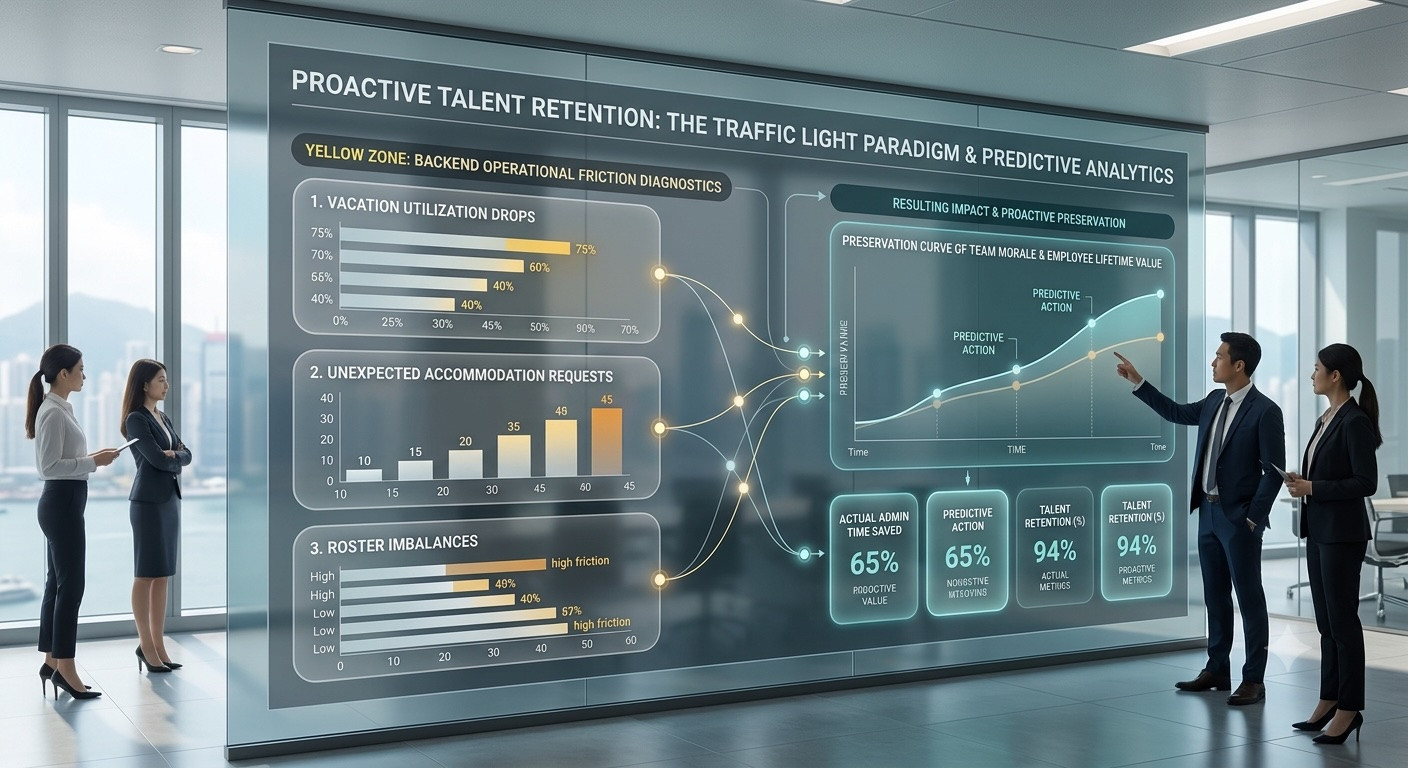
To break this cycle and establish true organizational durability, progressive people leaders are shifting toward proactive diagnostic support. This operational evolution requires the implementation of the "Traffic Light" Paradigm—a data-driven workforce architecture framework pioneered by employee relations analytics authorities like HR Acuity. This methodology focuses on tracking and isolating subtle, non-obvious organizational anomalies while they are still in the "Yellow Zone." These early friction points represent low-grade, pre-crisis workforce distress that never appears on standard employee satisfaction surveys but serves as a clear indicator of upcoming voluntary turnover and cultural decay.
Decoding the Yellow Zone: Identifying the Silent Triggers of Turnover
Anxiety, friction, and systemic detachment do not manifest overnight; they leave subtle digital footprints across an enterprise's daily operations. When employee relations specialists shift their focus to back-end tracking, they can spot operational shifts before human team members are even consciously aware of their own impending disengagement.
The first critical metric of Yellow Zone friction is a sudden, sharp drop in a specific business unit's vacation utilization rate. While legacy management structures might look at delayed annual leave as a positive sign of near-term productivity or temporary employee dedication, advanced human resource diagnostics recognize it as a major indicator of psychological unsafety. When a team collectively stops utilizing their statutory leave entitlements—such as the newly expanded fifteen-day mandatory paid holiday baseline—it frequently signals that professionals are operating under severe understaffing pressure, unmanageable workloads, or a toxic leadership culture that subtly penalizes taking time away.
The second primary operational signal is an unexpected spike in informal workplace accommodation or adjustment requests within a localized department. This can include subtle variations in remote work boundary adjustments, sudden requests for altered shift tracking patterns, or micro-adjustments to task allocations. When isolated, these requests appear minor; however, when analyzed across a rolling block, they reveal a workforce trying to modify an increasingly unsustainable environment. By pairing these indicators with comprehensive talent data, human resource business partners can build a highly accurate map of internal friction points, allowing for targeted operational interventions long before a department hits a critical attrition wave.
Implementing Proactive Interventions to Secure Employee Lifetime Value
From a strict corporate governance perspective, utilizing the Traffic Light Paradigm to intercept Yellow Zone friction solves a critical cost-control puzzle for executive boards. When an HR department uses predictive data points to execute an early intervention, the resolution strategy shifts from defensive salary countering to systemic workplace optimization.
To scale this approach with genuine compassion and structural transparency, organizations must establish clear operational playbooks for their people managers:
- Data-Informed Leadership Consultations: When a behavioral anomaly is flagged on the back-end, human resource specialists should provide localized managers with tailored coaching, ensuring that upcoming conversations focus on supportive welfare checks rather than punitive performance tracking.
- Proactive Structural Re-rostering: If an aggregate department shows clear signs of continuous burnout or leave stagnation, leadership should step in to adjust operational demands, utilizing flexible contract professionals to absorb immediate tactical surges and protect the core permanent team.
- Transparent Cultural Realignment: By addressing systemic operational friction openly, enterprises prove to their staff that data is being leveraged to improve their daily well-being, fostering a deep culture of psychological safety and shared organizational trust.
In a hyper-dynamic, fast-moving business hub like Hong Kong, where professional agility, career longevity, and employee wellness are increasingly prioritized over raw base compensation, an employer's internal care infrastructure serves as the ultimate corporate differentiator. When an organization builds an operational model that uses advanced diagnostics to protect and elevate its human capital, it drives sustainable engagement, prevents costly operational disruptions, and secures its most valuable talent assets against external market volatility.
References
- HR Acuity Annual Workplace Intelligence and Employee Relations Benchmark Survey
- Hong Kong Labour Department Official Guidelines on Workplace Psychological Well-being