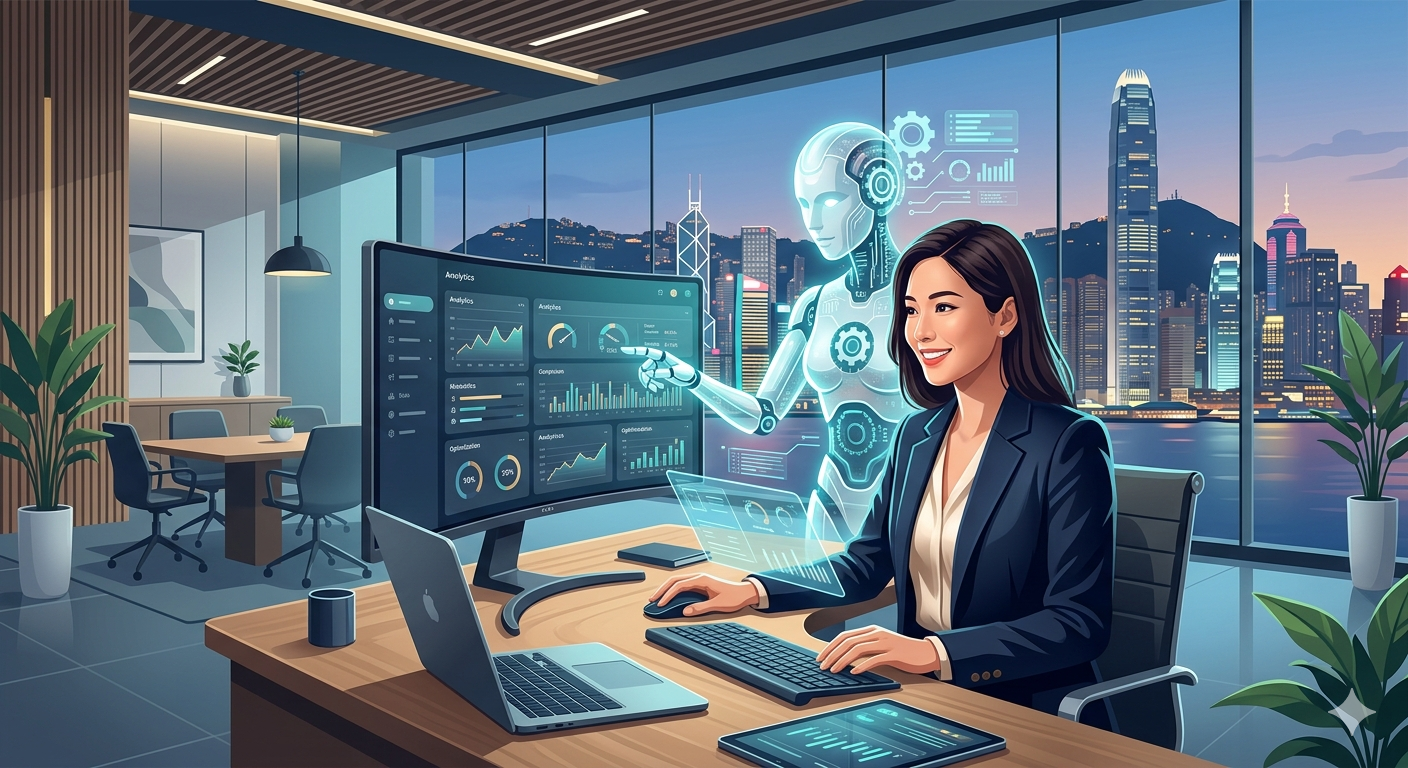
The conversation around Artificial Intelligence in the workplace has shifted. We are no longer talking about a distant future; we are actively designing the present. From automated workflows to advanced Retrieval-Augmented Generation (RAG) tools, AI integration is the defining operational shift of our era.
Yet, as leaders push for deployment, a silent roadblock often emerges: employee anxiety.
When professionals hear "automation," they often internalize "redundancy." If left unaddressed, this anxiety breeds resistance, dropping morale and stalling the very innovation you are trying to implement.
True digital transformation isn't just about technical deployment or cloud architecture—it is a masterclass in change management. To successfully transition, leaders must reframe the narrative: AI is not a replacement; it is the ultimate teammate.
1. Address the Elephant in the Room (Directly)
Anxiety thrives in a vacuum of information. When leadership introduces new AI tools without clear context, teams naturally assume the worst.
- The Strategy: Be transparent from day one. Acknowledge that change can be unsettling, but clearly state the intentbehind the technology.
- The Message: Shift the focus from "cost-cutting" to "capacity-building." Explain that the goal is to eliminate the mundane, repetitive tasks that drain their day—like manual data entry or basic report aggregation—so they can focus on high-value strategic execution.
2. Reframe the Role: The "Copilot" Paradigm
To build trust, employees need to see AI as a subordinate tool, not a competitor. A useful framework is to introduce AI as an administrative assistant or a "copilot."
"AI gives your teams the baseline data, but human domain expertise provides the steering wheel."
When you position AI as an engine that generates the initial 60% of a task (like sorting data or drafting templates), you empower the employee to be the vital 40%—the expert who edits, validates, adds contextual nuance, and makes the final decision. This emphasizes that human oversight is not just preferred; it is structurally mandatory.
3. Demystify the Tech with "Vibe-Coding" and Sandbox Learning
Fear of technology often stems from a lack of familiarity. If a tool feels like a "black box," people won't use it.
- Create Safe Spaces: Establish low-stakes "sandbox" environments where employees can experiment with prompting or low-code tools without the fear of breaking a live system or being judged on performance.
- Encourage Organic Innovation: When teams realize they can use basic logic to automate their own daily bottlenecks—a concept often called "vibe-coding"—their mindset flips from apprehension to ownership. They cease being passive subjects of change and become active drivers of efficiency.
4. Align Upskilling with Clear Career Pathways
You cannot ask employees to embrace a tool that they believe will make them obsolete unless you show them what their future looks like. Change management must be tied to a robust upskilling strategy.
If an AI tool reduces a project timeline by 30%, explicitly map out where that newly reclaimed time goes. Will they be leading client relations? Spearheading new strategic initiatives? Transitioning into high-level oversight roles? When employees see a clear, structured path for their own professional evolution, anxiety is replaced by career ambition.
The Leadership Takeaway
Successful AI integration is measured by adoption, not just implementation.
As directors and executives, our job is to ensure our people grow alongside our tech stack. By communicating with candor, establishing strict boundaries for human oversight, and investing in continuous technical learning, you do more than just optimize your operations—you build a resilient, future-proof workforce that views innovation as an opportunity, not a threat.