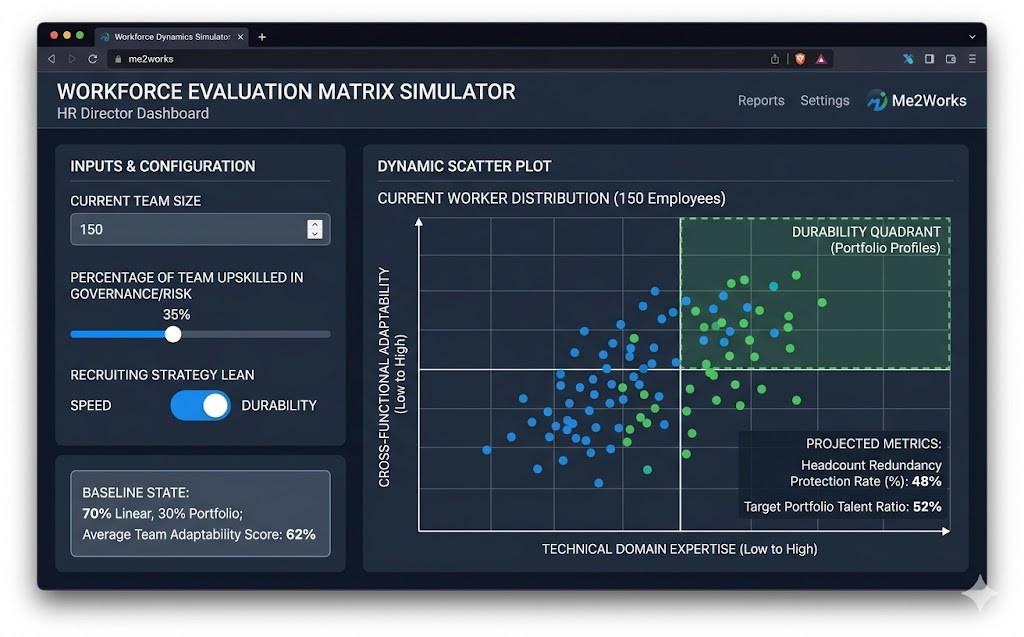
The core question echoing through the boardrooms of Hong Kong enterprises this quarter has fundamentally evolved. Hiring managers are no longer asking, "Does this candidate possess the exact technical credentials to execute this role today?" Instead, the strategic priority has shifted entirely to career durability: "Does this professional possess the foundational adaptability to remain highly valuable as our corporate landscape structurally mutates over the next twenty-four months?"
Welcome to the Endurance Era of the Hong Kong talent market. Driven by a sober economic environment, changing regulatory frameworks like the freshly enacted minimum wage hikes and "468 contract rules," and an accelerating corporate push toward internal automation, the era of linear career progression is giving way to something entirely new.
The Rise of the Multi-Dimensional "Portfolio Profile"
Forward-thinking HR business partners in Hong Kong's financial and technology sectors are reporting a distinct preference for professionals who bring a multi-dimensional perspective to a single headcount. This does not mean asking one worker to do the jobs of three people; rather, it refers to cross-functional acumen that mitigates business risk.
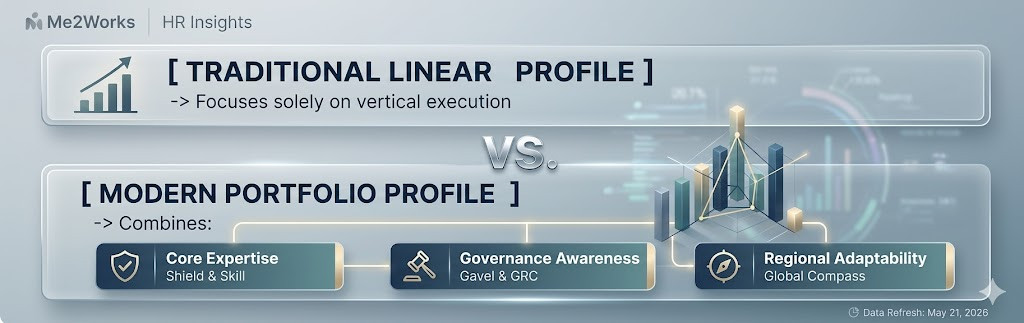
In 2026, the specific combinations gaining intense traction across local talent channels include:
- Commercial Leaders with Deep Governance Awareness: Sales and operational executives who intimately understand regulatory boundaries and local compliance compliance, ensuring growth doesn't trigger regulatory friction.
- Functional Specialists Who Contextualize Risk: Technical and product developers who evaluate their code and output against broader corporate liability and commercial metrics.
- Regional Managers Capable of Bridging Disconnects: Cross-border operators who can seamlessly translate international, high-level APAC strategy into precise, boots-on-the-ground local execution in Hong Kong and the Greater Bay Area.
Sourcing Strategy: Navigating Informal Market Signals
In a compact, highly connected business ecosystem like Hong Kong, raw resumes tell less than half the story. Employers are increasingly auditing candidates long before the formal interview sequence even initiates.
Talent acquisition teams are looking closely at real reputation indicators: how a leader structurally navigated a past corporate realignment, their professional judgment under intense commercial or regulatory pressure, and their communication transparency with stakeholder networks. The modern premium is placed square on professional character and proven judgment.
Actionable Blueprint for Hong Kong People Leaders
To thrive in this environment, human resource architectures must adapt away from static job descriptions and transition toward dynamic competency mapping.
- Deconstruct Rigid Roles: Review your open headcount requirements. Strip away legacy certification checklists and replace them with precise situational judgment parameters.
- Prioritize Internal Reskilling Systems: Given the tight 3.7% unemployment floor, finding perfect external talent is both costly and slow. Building structured internal mobility pathways is the most cost-effective way to close capability gaps.
- Recalibrate Candidate Evaluation: Restructure interview loops to actively assess comfort with ambiguity, commercial judgment, and the ability to operate effectively without perfect information.
The organizations that win the remaining half of 2026 will not be those that aggressively expand their headcounts, but those that intentionally design their workforce for long-term operational durability.
References
- Gemini Personnel Research. (2026). Hong Kong 2026: Building Career Longevity in a Market That Moves Fast.[Industry Intelligence Insights Report].
- Hong Kong General Chamber of Commerce / AustCham Analytical Briefs. (2026). Macro Sourcing Adjustments in APAC Financial Hubs.