
The Fiscal Tightrope of Modern Rewards
For human resource leaders and executive boards across Hong Kong, the traditional compensation and benefits playbook has officially reached its structural breaking point. Corporate platforms are confronting an aggressive fiscal challenge: corporate medical premium inflation in Hong Kong has accelerated into double digits, consistently tracking above 10% year-on-year.
This spike is not a temporary market fluctuation. It is the direct result of long-term structural changes, primarily driven by a rapidly aging domestic demographic—with government demographic projections indicating that 36% of Hong Kong's population will be 65 or older by 2046—and a private healthcare network managing escalated operational costs.
Simultaneously, employer budgets remain highly controlled. With market salary growth normalized between 3% and 5% and corporate talent demanding more extensive lifestyle, health, and flexibility support, HR leaders can no longer rely on simple, reactive cost-cutting measures. Continually swapping insurance providers to shave off minor premiums is a declining strategy. To maintain long-term corporate agility, organizations must fundamentally re-engineer how they construct and position their Total Rewards framework.
The Rise of Lifestyle Spending Accounts (LSAs) and Flexibility
As volume-driven, unconditional permanent hiring shifts toward precision talent acquisition, leading organizations are abandoning fixed, "one-size-fits-all" medical matrices in favor of Flexible Lifestyle Spending Accounts (LSAs).
LSAs allocate a fixed, employer-funded financial baseline that allows employees to personalize their coverage according to their specific life stage. This model addresses a diverse workforce: a Gen Z professional can allocate funds to mental health coaching, counseling apps, or mindfulness subscriptions; a mid-level manager can direct those same resources toward childcare support or upgraded family dental options; while senior staff can utilize them for specialized chronic disease management.
By decentralizing the benefit allocation process, corporations effectively cap their macro premium exposure while dramatically increasing the perceived value of the benefits package to the individual worker.
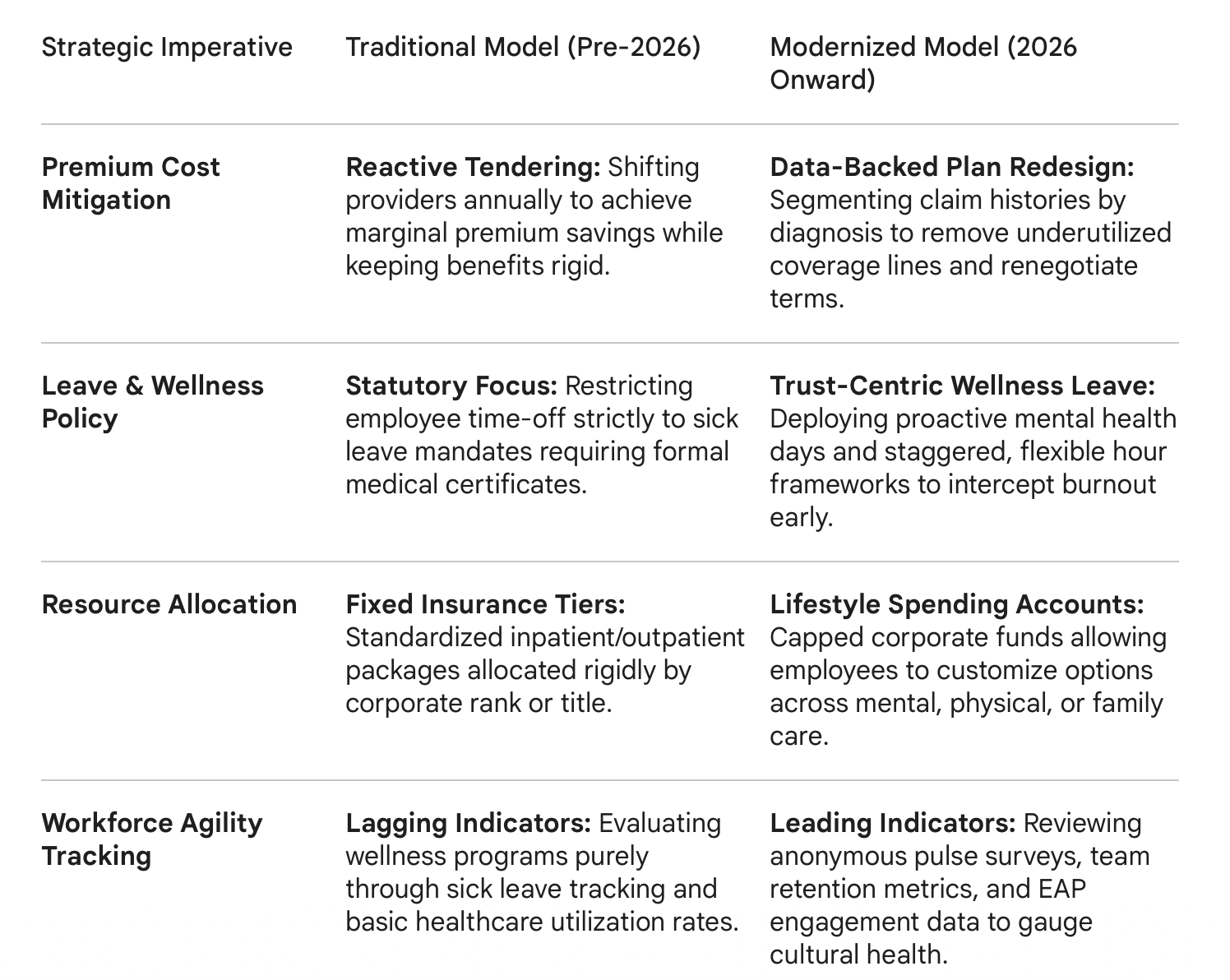
Tactical Framework: Redefining the Corporate Benefits Matrix
To successfully navigate this inflationary environment while keeping talent retention metrics stable, corporate leaders must pivot from acting as simple benefit administrators to operating as strategic value designers.
Building Psychological Safety as a Corporate Asset
The final, and perhaps most critical, element of a modernized benefits ecosystem is the deliberate creation of psychological safety. Introducing wellness leave, mental health apps, or flexible policies yields zero return on investment if the underlying corporate culture implicitly penalizes employees for utilizing them.
True career durability and corporate performance are sustained when executives and managers are trained to recognize the early indicators of chronic workplace stress. Leadership must normalize the practice of taking time off for emotional recovery. When an executive board openly treats mental stability as a foundational pillar of operational productivity—rather than an HR buzzword—the company reduces its reliance on expensive medical interventions, curtails unexpected resignations, and builds a sustainable, highly competitive corporate culture in the Hong Kong market.
References
- Howden Hong Kong, Corporate Benefits & Claims Inflation Insights (January 2026).
- Staffing Industry Analysts, Workforce Reskilling and Benefit Evaluations (November 2025).
- HR Magazine Hong Kong, Legislative Frameworks and Workplace Accommodation Strategies (April 2026).