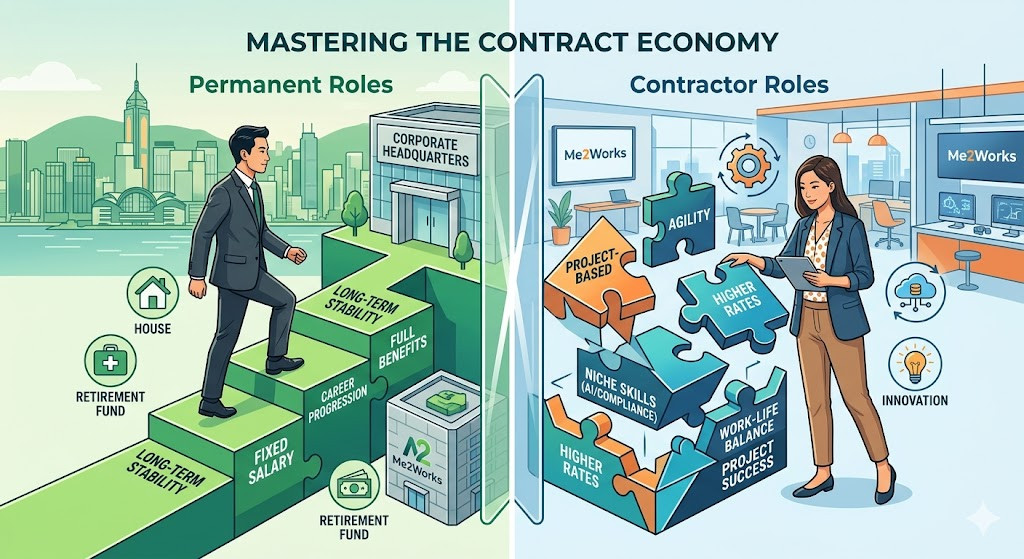
In 2026, the "Permanent Full-Time" model is being challenged. As businesses tighten their belts, we are seeing a massive shift toward Strategic Contracting in sectors traditionally reserved for permanent staff, such as Risk, Compliance, and Legal.
Why the Shift?
- Agility: Businesses need "plug-and-play" expertise for digital transformation and regulatory compliance projects.
- Cost Efficiency: Contractors allow firms to access high-level niche skills (like cybersecurity audit or AI implementation) without the long-term overhead of permanent benefits and severance liabilities.
- Candidate Preference: While security was once the primary driver, highly skilled professionals are now choosing contract work for the variety of projects and the ability to command premium daily/hourly rates.
Advice for Job Seekers:
- Build a Portfolio, Not Just a Resume: Contractors are hired for their specific outcomes. Ensure your LinkedIn and CV highlight projects completed and tangible results delivered.
- Embrace the "Interim" Label: Treat contracting as a career path, not a gap-filler. The current market rewards consultants who can jump between industries and solve complex problems quickly.
Advice for Employers:
- Redefine Your Culture: If you rely on contractors, ensure they feel integrated. A disjointed culture where contractors feel excluded from the team can lead to lower project engagement and quality.
- Streamline Onboarding: Contractors are expensive assets; the faster they can contribute, the higher your return on investment.
At Me2Works, we are seeing this shift firsthand. If you are looking to hire specialized interim talent or seeking your next project-based opportunity, our platform is optimized to connect you with these high-impact roles.
References:
- Robert Walters: Insurance Tech Roles Lead 2026 Hiring Trends
- Simmons & Simmons: Key Developments in HK Employment Law