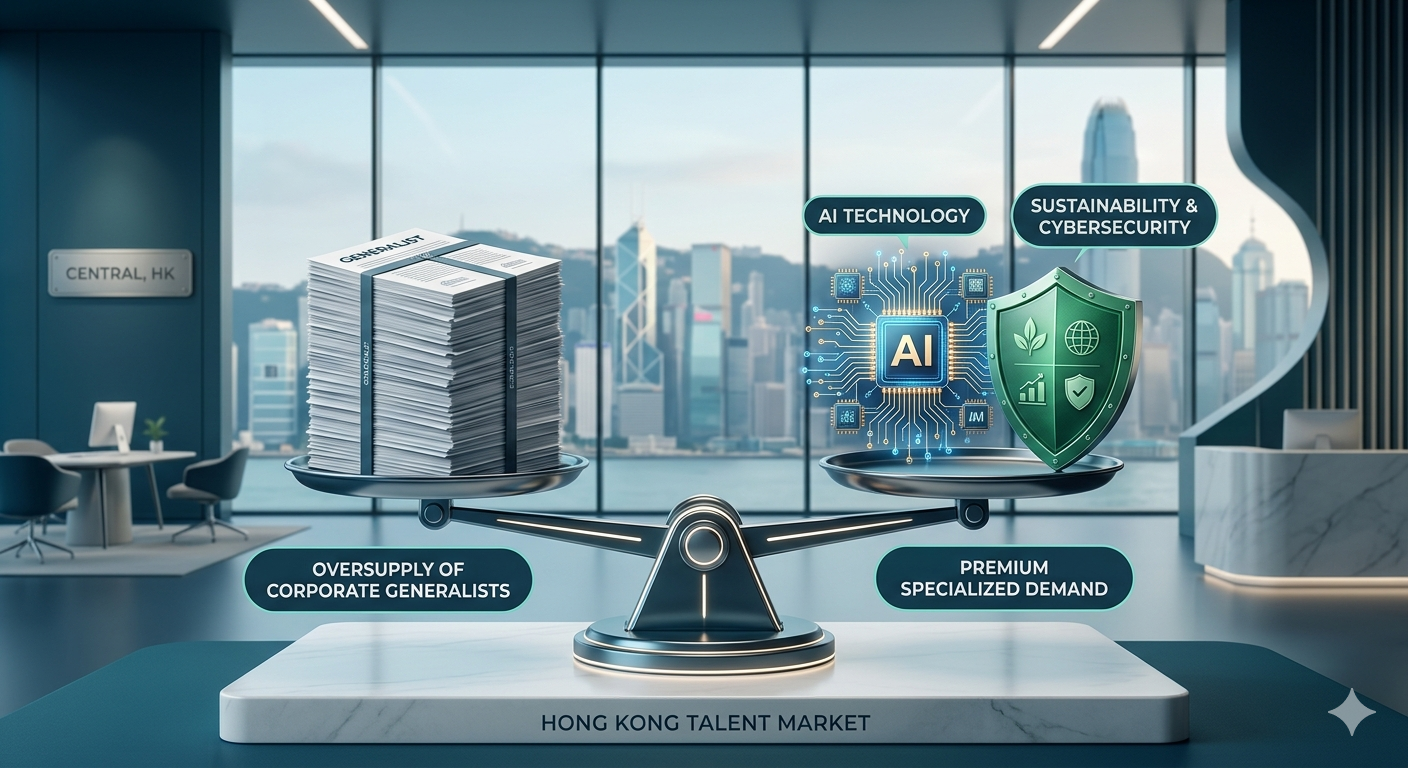
The contemporary Hong Kong employment market presents an exceptional structural paradox. On one hand, data from regional recruitment indicators shows that nearly all corporate employers report immense difficulty in securing the right talent. On the other hand, the aggregate unemployment rate sits stably at three point nine percent, meaning there are over one hundred and thirty thousand professionals actively looking for work.
If thousands of professionals are searching for roles and hundreds of firms are desperate to hire, why isn't the market clearing?
The reality is that Hong Kong has entered a period of intense structural talent mismatch. Post-pandemic restructuring, rapid corporate rightsizing, and the off-shoring of routine transactional processes have created a significant surplus of traditional generalist talent. Mid-level general managers, standard operations administrators, and traditional back-office professionals find themselves competing in a highly saturated labor pool.
Meanwhile, market demand has shifted dramatically toward deep specialists. There is a massive talent deficit in highly critical areas:
- Artificial Intelligence architects who can convert large language models into commercial software infrastructure.
- Cybersecurity engineers capable of managing complex enterprise cloud migrations.
- Regulatory compliance experts fluent in the latest stablecoin and cryptocurrency licensing frameworks.
- Sustainability officers equipped to handle mandatory environmental, social, and governance reporting.
This imbalance has led to severe polarization in salary expectations. While traditional business lines see flat or modest annual merit increases of around three to five percent, top-tier specialists are demanding ten to twenty percent premiums to even consider changing companies.
To break this gridlock, human resource leaders must abandon traditional transactional recruitment playbooks. Relying on generic, multi-agency job postings frequently results in an unmanageable wave of identical resumes generated by artificial intelligence tools, slowing down internal HR teams without delivering true quality.
Instead, forward-thinking organizations are transitioning to a skills-based talent architecture. This involves executing focused, exclusive agency mandates that prioritize technical depth and behavioral adaptability over standard university degrees or generic corporate titles. By treating talent acquisition as a targeted executive search rather than a mass-sourcing exercise, firms can identify adaptive professionals who can bridge the gap between legacy corporate operations and modern digital platforms.
References
- Headhunter Hong Kong Market Insights and Comprehensive Salary Guide Reports.
- KPMG International Hong Kong Employment Outlook and Executive Talent Strategy Analytics.