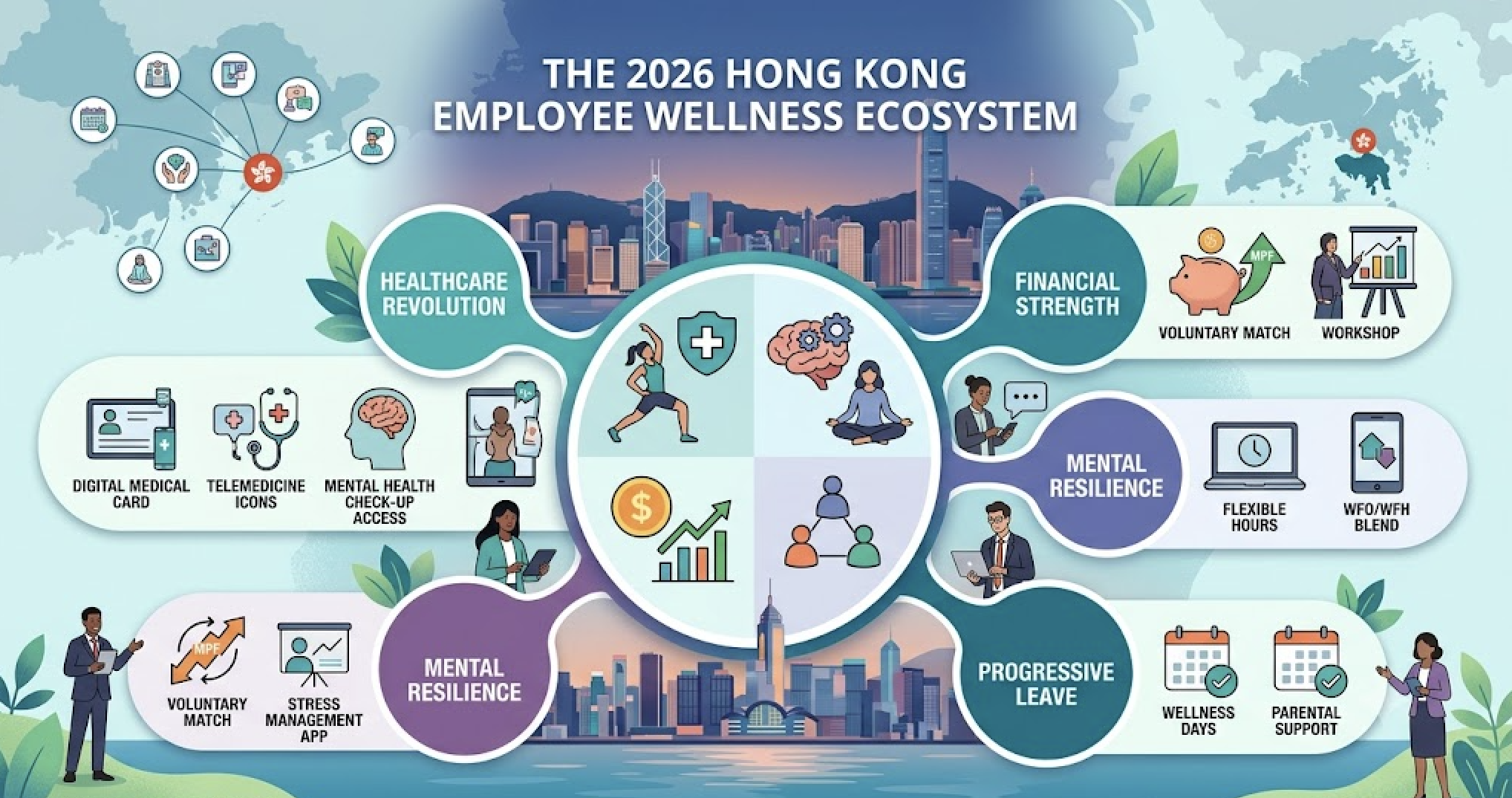
For decades, the standard employee benefits package in Hong Kong was predictable: a basic tier-one medical card, statutory Mandatory Provident Fund (MPF) contributions, and an annual dinner. However, as we cross into mid-2026, the corporate landscape has fundamentally transformed. With the territory's unemployment rate holding steady at a tight 3.7% and organizations facing highly selective, value-driven hiring mandates, generic perks no longer move the needle for top talent.
The modern Hong Kong professional—navigating a fast-paced business environment characterized by rapid digital transformations and structural market changes—is looking for something more substantial: holistic wellness and functional benefits that directly improve their quality of life. For HR leaders using the Me2Works platform, shifting from transactional perks to a strategic wellness ecosystem has become a key driver for talent retention and employer branding.
The Shift to Holistic, Hyper-Localized Wellness
Employee expectations in Hong Kong have shifted toward three core areas that traditional corporate plans often overlook:
- Mental Health and Psychological Safety: High-pressure environments have made mental resilience a business imperative. Forward-thinking local enterprises are replacing traditional employee assistance programs (EAPs) with direct, confidential access to clinical psychologists and mindfulness applications.
- Flexible and "Cafeteria-Style" Benefits: A single single-parent professional, a Gen Z tech specialist, and a senior executive nearing retirement require vastly different support structures. The trend in 2026 focuses on flexible spending accounts, allowing employees to allocate corporate dollars across gym memberships, elderly care support, or personal development courses.
- Chronic Fatigue and Preventative Care: Given the long working hours historically associated with Central and Kowloon office clusters, preventative health screens, ergonomic workspace stipends, and structured downtime are shifting from "nice-to-have" perks to core operational strategies.
A Framework for Modern Employee Benefits Strategy
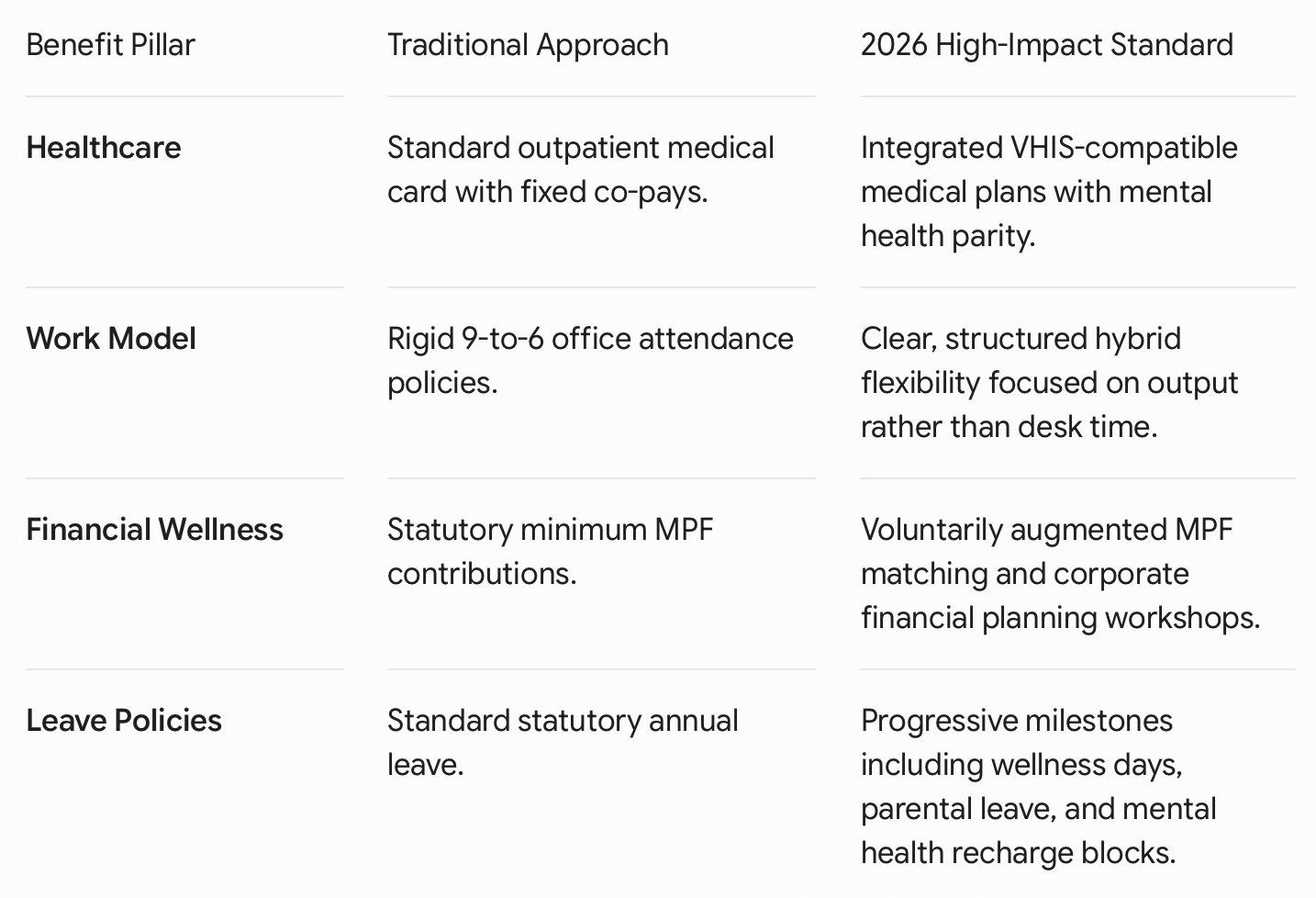
To stay competitive in the current hiring climate, human resources professionals should evaluate and optimize their talent offerings using a structured framework:
Driving Long-Term Retention Through Strategic Alignment
Ultimately, an optimized benefits program must serve as a reflection of corporate culture. When an organization proactively supports its team's well-being, it builds cultural resilience and long-term career durability.
As you refine your human capital strategy this year, remember that a well-designed wellness program reduces absenteeism, builds brand loyalty, and positions your firm as an employer of choice in a highly competitive market.
References
- Hong Kong Human Resources Management Insights, The Evolution of Corporate Well-being and Flexible Benefits in APAC (March 2026).
- Mercer Marsh Benefits, Hong Kong Employee Health and Value Trends Report 2026 (January 2026).